
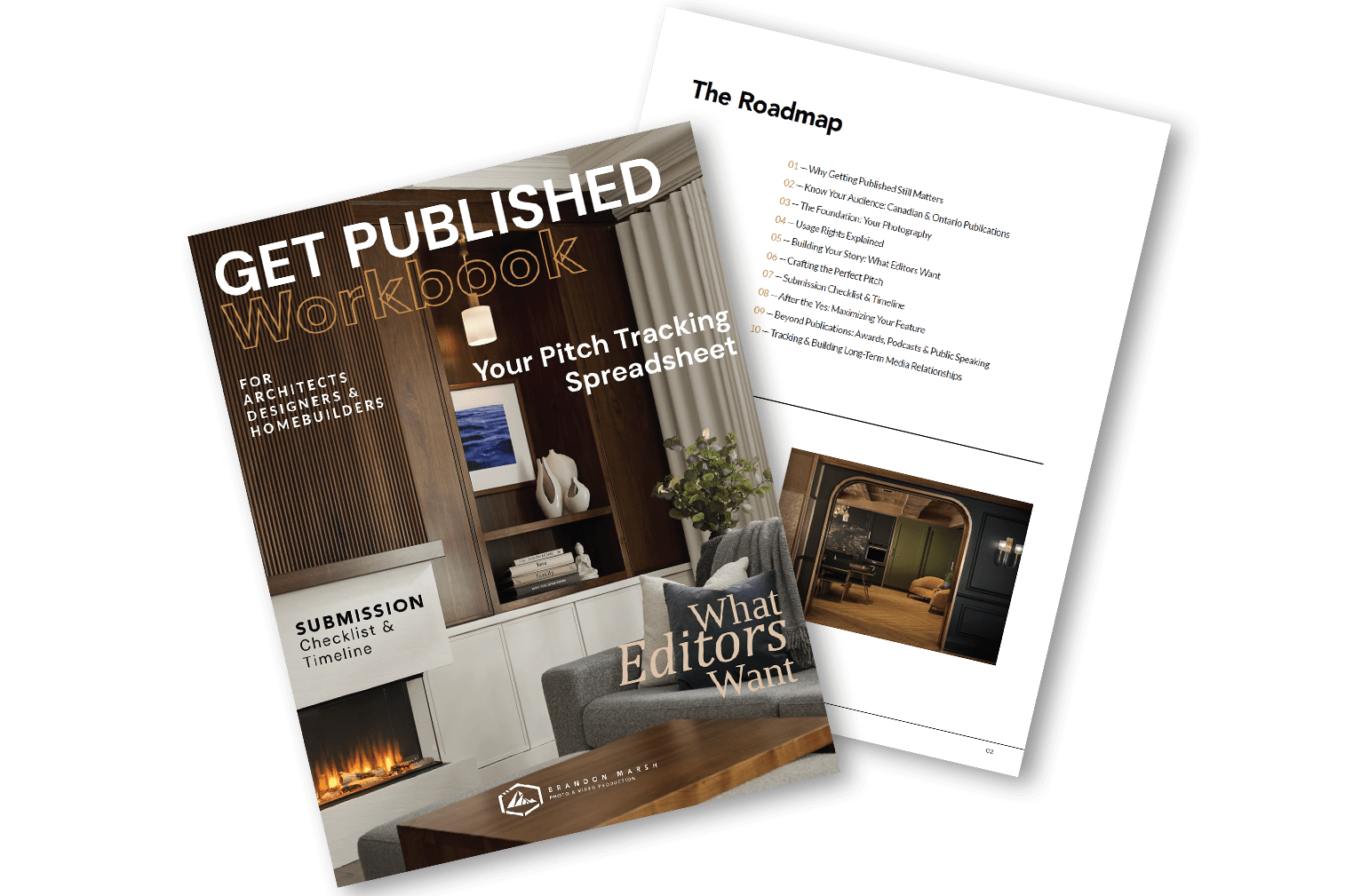
Most architects and interior designers finish a project, post a few images on Instagram, update their website, and call it a day. But if the work is genuinely good and if you went through the trouble of hiring a professional photographer… You are only scratching the surface of how you can market yourself with this content.
Getting published isn’t reserved for the biggest firms or the flashiest projects. It’s for anyone willing to put in a bit of strategic effort and stop assuming editors will find them on their own. They won’t. They’re too busy reading pitches from people who figured that out already.
This is not a guide to every publication on the planet. It’s a starting point for architects, interior designers, and custom homebuilders in Toronto, Ottawa, and across Ontario. In general, most of it applies whether you’re in Vancouver, Halifax or anywhere in the world of publications. Regional publications exist everywhere, and most of them are more accessible than people think.
Why Editorial Coverage Still Matters
I know there are some people out there saying “social media is everything now, who reads magazines?” And to that I’d say… your ideal clients do! The homeowner planning a significant custom build, the developer evaluating design firms, the architect looking for a collaborator — these are not people making decisions solely based on Instagram Reels. They research. They read. And a feature in Azure Magazine or House & Home carries a kind of credibility that no amount of self-published content can replicate.
An editor decided your work was worth sharing with their audience. That’s a third-party endorsement. It’s different than telling everyone yourself.
There’s also the compounding effect that most people miss. A single published feature becomes a press page on your website, a slide in your next proposal, material for award submissions, and a reason for a regional outlet to cover you as a follow-up story. One piece of published work, deployed well, does a lot of work.
Remember that publications no longer only exist as print magazines, there are more digital publications than what are on the shelves in Indigo. The reach is well beyond those will still read the tangible copies.
Start with Regional Publications
The number one mistake people make when they decide to pursue publication is aiming straight for Architectural Digest. Totally respect the ambition! But AD is selective in a way that would make a law school admissions committee feel relaxed. If your first published project isn’t in AD it doesn’t mean your work isn’t good enough. It means you skipped a few steps.
The smart play is to start with Ontario and Canadian publications first. Designlines Magazine in Toronto covers exactly the kind of residential and commercial work being done by architects and designers in this market. House & Home is Canada’s premier shelter publication and actively features Canadian projects. Azure is internationally respected and based right here in Toronto, Ontario. Canadian Architect, Canadian Interiors, Award Magazine — there’s a real ecosystem of credible outlets that are more accessible than their American or international equivalents and more relevant to the clients you’re actually trying to reach.
Build press history here first. Editors at larger outlets discover talent through smaller regional coverage more often than you’d think. It also turns out that having published work makes your next pitch easier, because you can reference it. Funny how that works.
The Thing That Disqualifies Most Submissions
To put it bluntly… Weak photography!
I realise I may be biased here, so feel free to take this with a grain of salt… But it’s true. Editors receive hundreds of submissions. The images are a huge part of the first impression. A project with a captivating story and mediocre photography loses to a less interesting project with exceptional photography almost every time.
Editorial photography isn’t the same as documentation. It needs to tell a story, carry atmosphere, emotion, and give an art director enough variety to design a spread. That means both landscape and portrait orientations, multiple times of day, establishing shots, vignettes and tight details. Most importantly, styling that with intention. If the images were shot quickly to tick a box, an editor will be able to tell.
On a side note, most publications want unpublished work. Which means that project you’ve been posting on Instagram for the past three months? That window may already be closed for certain outlets. If publication is part of your intention, it’s worth thinking about that before the images go live anywhere. In fact, you should determine your intentions before the project is documented.
Hold off on posting the work until you know where it stands with publications and make sure you communicate with all vendors involved. Photographers and videographers included. Anyone involved can impact this opportunity, for good or bad. For example, if multiple firms are involved in a cost-share, you’ll want to make sure everyone is on the same page. If one person posts before you’ve heard back from a publication, the opportunity is cooked.
A well-amplified feature can generate inbound enquiries for years. Most people get two weeks of excitement and then move on. Don’t be like most people.
What Editors Are Actually Looking For
It may surprise you to learn that editors aren’t looking for something that is just pretty. They’re looking for stories. A stunning space with nothing interesting to say about it is harder to place than a more modest project with a genuinely interesting narrative.
What’s the story behind the project? Was there a difficult site? An unusual brief? A material or craft element that deserves to be explained? A client with a vision that pushed the design somewhere unexpected? First of it’s kind? That’s what a pitch needs! A strong reason for a reader to care beyond the aesthetics.
The pitch itself should be short. Under 300 words. Editors are not sitting around waiting to read essays about your creative process.
They want to know:
- What is the project and where is it located
- Who designed it, who built it, and who photographed it
- What makes this project different
- What problem did the design solve, and how
- What is the story behind the client brief
- What materials, systems, or craft elements are worth explaining
- When was it completed and has it been published anywhere else
- How many high-resolution images are available and in what formats
- Are you offering exclusivity, and if so for how long
- why does it belong in their publication specifically.
That last part is key. Showing you’ve actually read the magazine and understand what they publish is what separates a thoughtful pitch from a mass submission. They can tell the difference immediately.
What No One Wants to Talk About: Usage Rights
If you’re planning to pitch your project to publications, there’s a conversation worth having with your photographer before you do anything else. In Canada, photographers retain copyright to their images by default. The license you purchased for your own marketing use doesn’t automatically extend to third-party editorial publication unless this is outlined in your contract or invoice..
Most photographers are supportive of publication because it benefits them too. But assuming you can use the images however you want without checking is the kind of thing that creates awkward conversations that no one really wants to have. Sort it out upfront. Your photographer is your ally.
After The Yes
Getting published is only the beginning! The firms that get the most out of editorial coverage are the ones who treat a feature as an asset to be deployed, not just to screenshot the work and forget about it. There is so much to follow up with including: a thanks to the editor, a press page on your website, an “As Seen In” section, the feature referenced in proposals, tagged posts that give the publication a reason to reshare your content, and award submissions that are strengthened by the coverage.
A well-amplified feature can generate inbound enquiries for years. Most people get two weeks of excitement and then move on. Don’t be like most people.
There’s So Much More: Get The Workbook
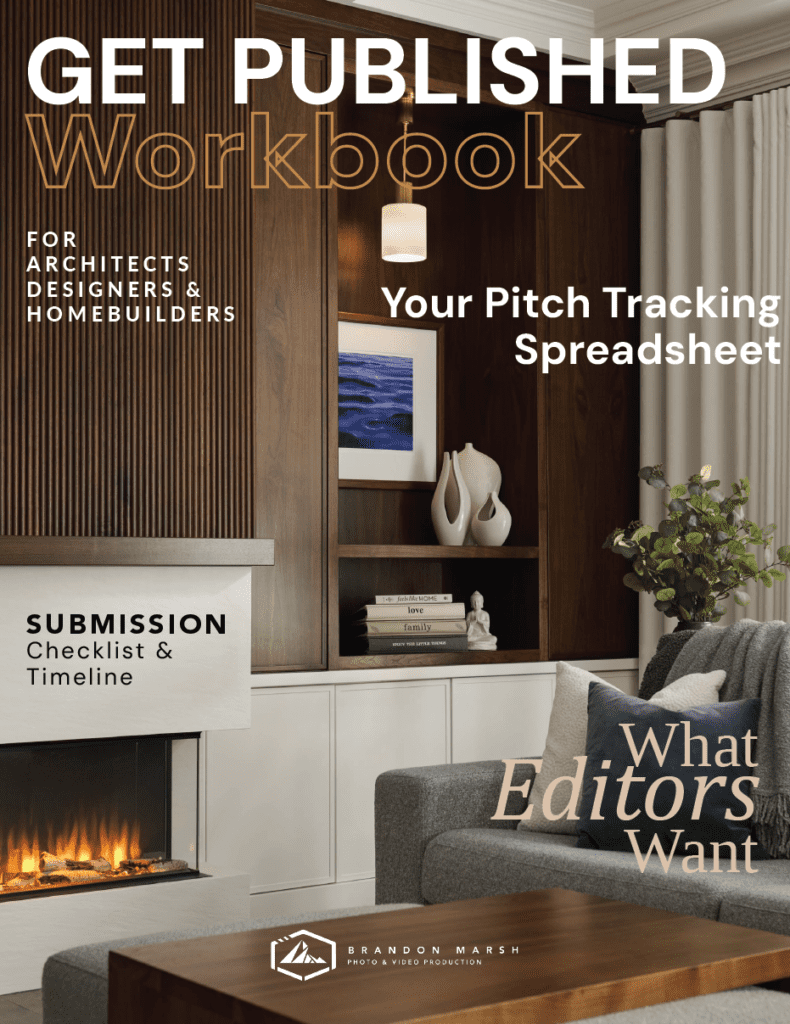
This is only an overview. A full scale workflow with information on which publications to target and how to approach each one, exactly how to structure a pitch, the submission checklist, how to build editor relationships over time, and what to do when you get a yes — is all in the Get Published Workbook.
It’s free. It covers some of the Canadian, Ontario, and international publications. It includes direct submission links so most of the leg work is already done for you, and it comes with a “pitch tracking spreadsheet” so you can manage submissions without losing track of who you pitched and when.
If you’ve got a project worth sharing, you might as well share it properly and go beyond the algorithm…
Let me know if there is anything I can do to help!
– Brandon

Leave a Reply

A clear, step-by-step guide for architects, interior designers, and custom homebuilders who want to get their projects in front of the right editors.
No spam. Just the workbook, a follow-up to help you get started, and occasional monthly insights.
Get Your Projects Published Without Guessing What Editors Want
Free Workbook
Delivered straight to your inbox. Start building your story today.
For Architects, Interior Designers & Homebuilders
Includes a pitch tracker to stay organized
Step-by-step
Submission Process
Find the right publications in Canada & Ontario


Get the workbook

Most architects and interior designers finish a project, post a few images, and move on. This article breaks down why that's a missed opportunity and how to start getting your work in front of Canadian editors, award panels, and the publications your clients actually read.
Get Published Workbook
How to Get Your Architecture or Interior Design Project Published
Still images document a project, but video brings it to life. By adding motion, pacing, and perspective, you can communicate the experience of a space in a way that feels more immersive and engaging.
adding video

Why Every Interior & Architectural Shoot Should Include Video
Creating content without a plan often leads to scattered results. This blueprint focuses on building a structured approach that helps you create with intention, stay consistent, and develop a library of visuals that supports your work over time.
Planning Content

The Content Creation Blueprint
Cost-sharing is a simple way to get more out of your investment in photography and video. By collaborating with other contributors on a project, you can reduce costs, streamline the process, and create a cohesive set of visuals that benefits everyone involved.
COST-sharing

Cost Sharing: A Guide for Architects, Interior Designers & Home Builders
Real experiences create something staged content cannot. When people interact naturally with a space, product, or service, the result is imagery that feels lived in, relatable, and far more meaningful to your audience.
Real Experiences

Be the first to comment